Collaboration is the biggest innovation
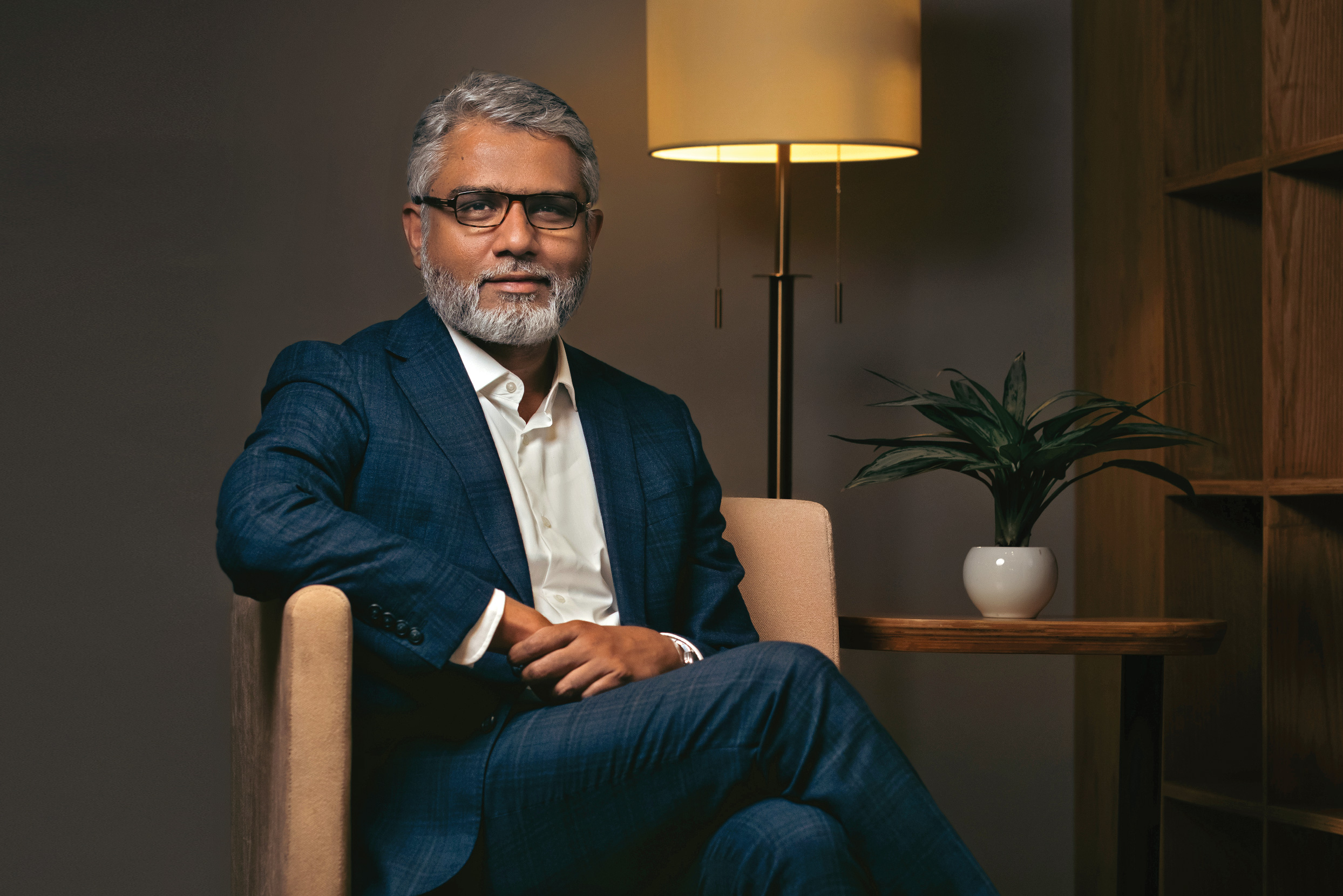
You have been appointed as the CEO and Managing Director for the third term. It would be really inspiring to know from the leader himself about the initial days of your career to be the man of IPDC today?
It was right after the completion of my bachelors in Business Administration from IBA that I joined American Express Bank in Chittagong in 1999. Within a year, I was asked to head the projects and re-engineer them. I can still recall that fulfilling moment when I was sent to London after successfully delivering the project. I completed one of the most advanced project management – Six Sigma Black Belt Training by 2001. Since then, I have been on different global transformation project management teams in different countries such as Singapore, Hong Kong, UK, India, and US.
Six Sigma Training aided me in my endeavors towards process improvement and business transformation while I was working for advanced deposit structure products abroad. Following this, I was nominated for the Performer Award.
In 2005, when American Express planned to close down, Standard Chartered Bank purchased its operations in Bangladesh. I was offered to continue with American Express to work with the global transformation team, but I chose to move to Standard Chartered Bank.
In 2006, IPDC came into the picture. Honestly, it was a tough decision to move from one of the biggest multinational banks to a Non-Bank Financial Institution (NBFI) with a much smaller scale of business. But as I love to challenge myself, I was tempted to work as a change agent in a new environment irrespective of its stature.
Can you give us a glimpse of the changing picture of IPDC with your journey as one of the youngest MDs & CEOs of the industry?
IPDC was going through a rough patch with high Non-Performing Loans (NPL) of around 37%. Today that figure has gone below 1%. It was the need of the hour to formulate and implement new business strategies for IPDC, foreseeing how the company’s undertaking can be made more relevant to the socio-economic challenges and opportunities of Bangladesh in the next ten years. A Home for Every Family enabled 50,000 families to get a dream home, Automated Supply Chain Finance by enabling 25,000 MSE’s, Empowering Women by enabling 10,000 women to build financial and non-financial assets, Creating 2000 new Entrepreneurs, Going beyond megacities by enabling families of tier 2 and 3 cities to avail retail finance, Bringing Convenience Home by enabling 1000,00 families to enjoy home convenience goods have been made the key strategic pillars for the company. The company went through a successful rebranding exercise including a change in the company name and pay off the line, reflecting the change in its vision. The appropriate organizational capability was built in HR, distribution, IT and brand to make this revolution a success.
Innovative ideas have been put into place by forging partnerships with leading steel, cement makers and leading NGOs of the country to introduce home loans to lower-middle-income families in small cities and suburban areas where they were absent.
The team designed and initiated products featuring woman empowerment as we believe that the true essence of financial freedom for any woman comes from ownership of property. Hence, apart from lucrative augmented features like free driving sessions and so on, much-privileged loan and deposit interest rates are also accommodated, especially for females.
In a business, whether it is big or small, it is necessary to ensure proper liquidity and bridging of the gap between the processing of the order and receiving the payment. Sometimes businesses face a lack of funds to execute any order on time. To ensure better liquidity and empower businesses to execute their orders without any crisis of funding, IPDC offers work order financing for all types of businesses.
Where do you see IPDC in the next five years?
After achieving huge growth in mature industries, we now focus on untouched, underdeveloped areas of potential. With a more developed perspective on future market trends, we are expanding geographically and diversifying the possibilities. We intend to achieve this through a network of rural and semi-urban branches supported by organizational reinforcement in the form of affordable retail and supply chain financing.
To enhance efficiency and transparency for the businesses, we are building a robust technological platform. This platform is not only for IPDC’s own advancement but also for educating and preparing clients to adapt themselves to digitalization.
Due to changing financial preferences, increasing competition and advances in technology, market dynamics of the financial industry have been evolving. In this evolution, we must innovate to stay ahead. We strive to understand what the market wants, to make smart product improvements, and to develop new products that meet and exceed clients expectations. IPDC’s Supply Chain Finance with a fully automated technology platform will bring suppliers, vendors, and distributors under one umbrella. Traditionally structured finance, however, will open the door for robust projects to be initialized.
Besides a holistic financial advisor, we believe in continual improvement in client service quality. In delegating the industry, people with expertise in client relationship management are invested in IPDC to provide regular training and development programs.
As you mentioned, the initiatives are towards accommodating the unbanked population. Has IPDC set a map for it already?
Small and Medium Enterprises (SMEs) drive the economic growth of our nation with their ability to innovate and employ in large numbers. However, quite a considerable number of Micro, Small and Medium Enterprises (MSME) who are relentlessly contributing a big chunk to the economy, remain unnoticed and unbanked. Lack of access to loans for small businesses in Bangladesh has emerged as an obstacle in the development of the economy. Besides, limited interconnectivity between corporations and SMEs, as well as lack of financial opportunities, have contributed to both the rise in business interruption claims and new risks to the economy. By mitigating perceived risk and thereby addressing key bottlenecks to supply chain financing, IPDC emerges as a game changer. With better foresight, planning, and strategy, IPDC is developing a digital supply chain finance platform built on blockchain technology named “Orjon” that is sure to bring significant transformation in the Bangladesh economy.
Orjon will help the unbanked sector of the economy with low-cost, collateral-free financing against their needs in an easy, efficient manner. Being supported by blockchain technology also adds state-of-the-art security features on which MSMEs can completely rely for hassle-free management of their working capital.
Can you tell us a little more about Orjon?
Since 2012, IPDC has been steering its Supply Chain Finance. And with an efficient team, we are already leading in the market. Here we envision to go beyond the megacities, breaking the geographical barrier and accommodating a large number of MSEs under our facility with better process efficiency. However, as the process is manual at this moment, despite the best of our interest, at times we fail to cover the needy. Hence, for the very first time in Bangladesh, a comprehensive supply chain financing solution which will enable collaboration among corporations, micro and small enterprises (MSEs) and financial organizations within one single chain. At this point in time, undoubtedly, collaboration is the biggest innovation.
This Digital Supply Chain Finance platform called Orjon will enable easy financing through Factoring Finance, Work Order Finance, and Distributor Finance. Process efficiency is inevitable in every sphere and with this, real-time processing can be achieved across cities for unlimited MSE’s. Soon this potential-rich yet unbanked population will be under technological inclusion.
In five years Orjon will facilitate more than 25,000 MSEs with easy and collateral free financing services and provide corporations with better supply chain management. Hopefully, this initiative will help to develop a dynamic business environment, expand the market with better financial growth, and create employment opportunities for over 200,000 people.
Tell us a bit more about the digital platform and why it is necessary?
We have been thinking of developing an integrated digital platform for a long time. Knowing the challenges faced by suppliers and distributors to manage their working capital, initially, we facilitated the whole Supply Chain Finance in a manual environment. But, operating revolving and collateral free finance in a manual environment is quite a challenging task. In our everyday business, we face the risk of fraudulence, lack of proper authentication, longer processing time and barriers to expanding the service geographically.
To overcome these challenges, we have only one way – automation. We have explored so many available automated systems from all over the world and realized that we need a custom-made digital platform which is able to bind all the stakeholders-corporates, suppliers, distributors, and IPDC in one platform, ensuring real-time processing, transparency, data security, and consensus among all the parties. These requirements can only be fulfilled with blockchain technology.
As we all know, blockchain is a contemporary technology used for developing highly secured systems due to its unique properties of allowing shared ledger with a decentralized control system. We are going to use IBM blockchain platform for developing our Supply Chain Finance digital platform.
Who are the partners of this Digital Supply Chain Platform?
Well, blockchain is a very advanced technology. When we had searched for our technological partners who are experts in Blockchain technology, we found a handful of them. After assessing all their past projects on Blockchain and team expertise, IBM was found the most suitable for meeting our requirements.
IBM has vast experience in working with Blockchain technology. Similar to IPDC’s Supply Chain Platform, IBM and China’s supply chain manager Sichuan Hejia has a Blockchain-based supply chain financial services platform. Besides, IBM and one of the Indian multinational conglomerate and lender announced a partnership in November of 2016 toward developing Blockchain applications for better, more efficient supply chain financing among India’s SMEs. According to IBM, this will be the first supply chain finance Blockchain-enabled project in there.
When do you plan to launch the Digital Supply Chain Platform powered by Blockchain technology?
It’s a mammoth task to develop such a comprehensive yet integrated digital platform for supply chain finance. Currently, IPDC’s business transformation team and IBM’s team are working on developing the technological platform. Simultaneously, the product and business team are working on the product program guideline to make the product more flexible and beneficial for all the stakeholders. We are hopeful to launch the platform at the beginning of 2019.
IPDC along with BSCMS recently honored the companies with the best supply chain management and the best supply chain managers. What was the thought behind this?
Yes, for the very first time ever, we made an effort to create a holistic supply chain financing eco-system in Bangladesh, it was an attempt to bring together all the stakeholders towards exploring potential scopes of Supply Chain Management and acknowledging spearheads.
Bangladesh Supply Chain Management (BSCMS), the biggest association of proficient members in the field of Supply Chain and IPDC Finance Limited had jointly introduced the most prestigious platform, Bangladesh Supply Chain Excellence Award (BSCEA) 2018 to recognize the extraordinary contribution in the field of Supply Chain Management. Awardees were recognized on the basis of their visible contribution during 2017 in various areas of supply chain management in manufacturing and service organization.
There is a dire need of mutually beneficial partnerships to leverage activity, experience, and resource in the country’s growing economy. We hope such an acknowledgment platform will be a genuine space to promote overall trade and business and bring together the shared motives of all to facilitate a stronger network, faster process and smoothest possible way of supply chain management. Because, it is quite evident that the success of any business, amid fierce competition and global challenges, is inextricably linked to the performance of its supply chain. Soon, we believe, we will have our unbound rise with a genuine mutual collaboration of all.