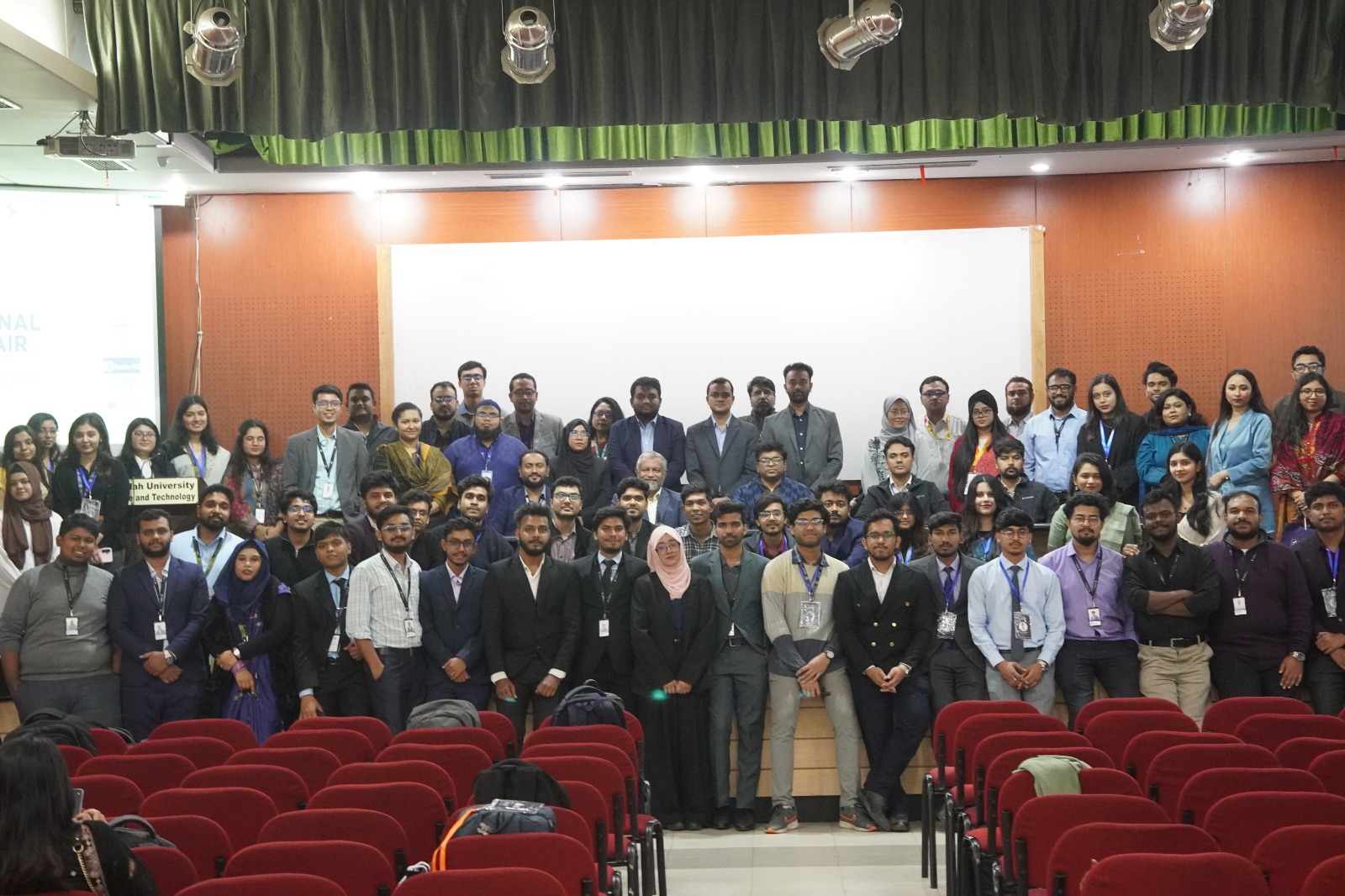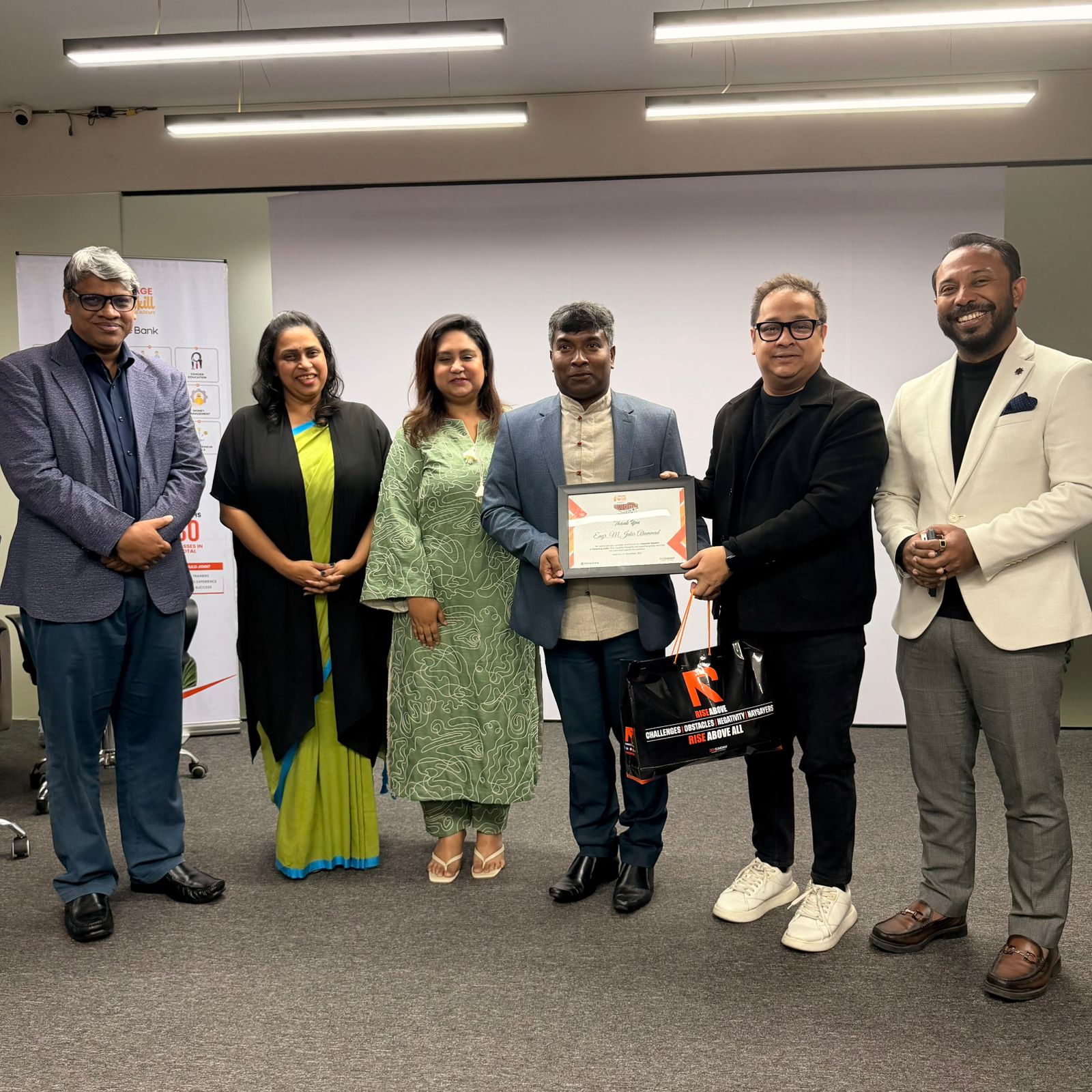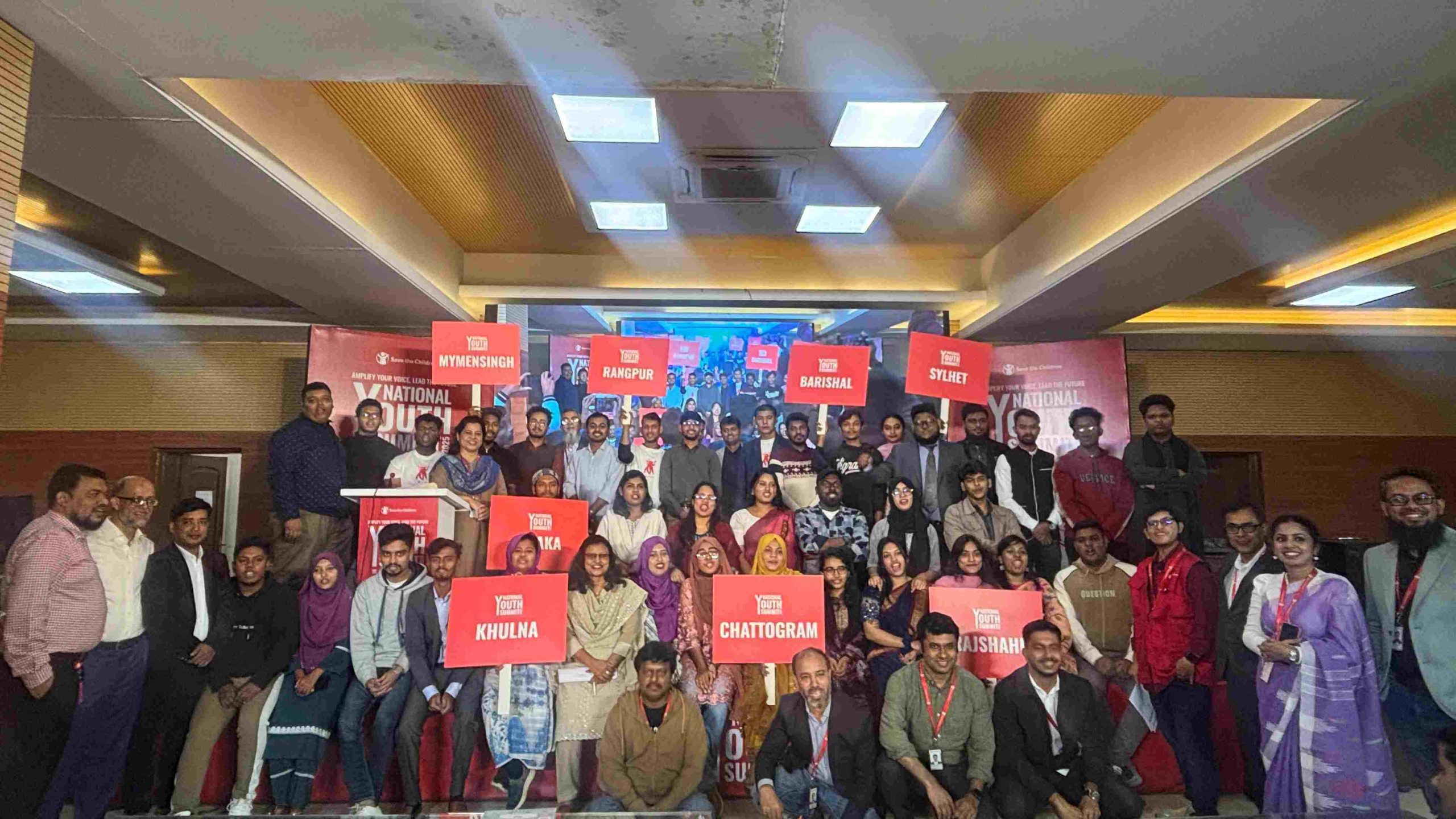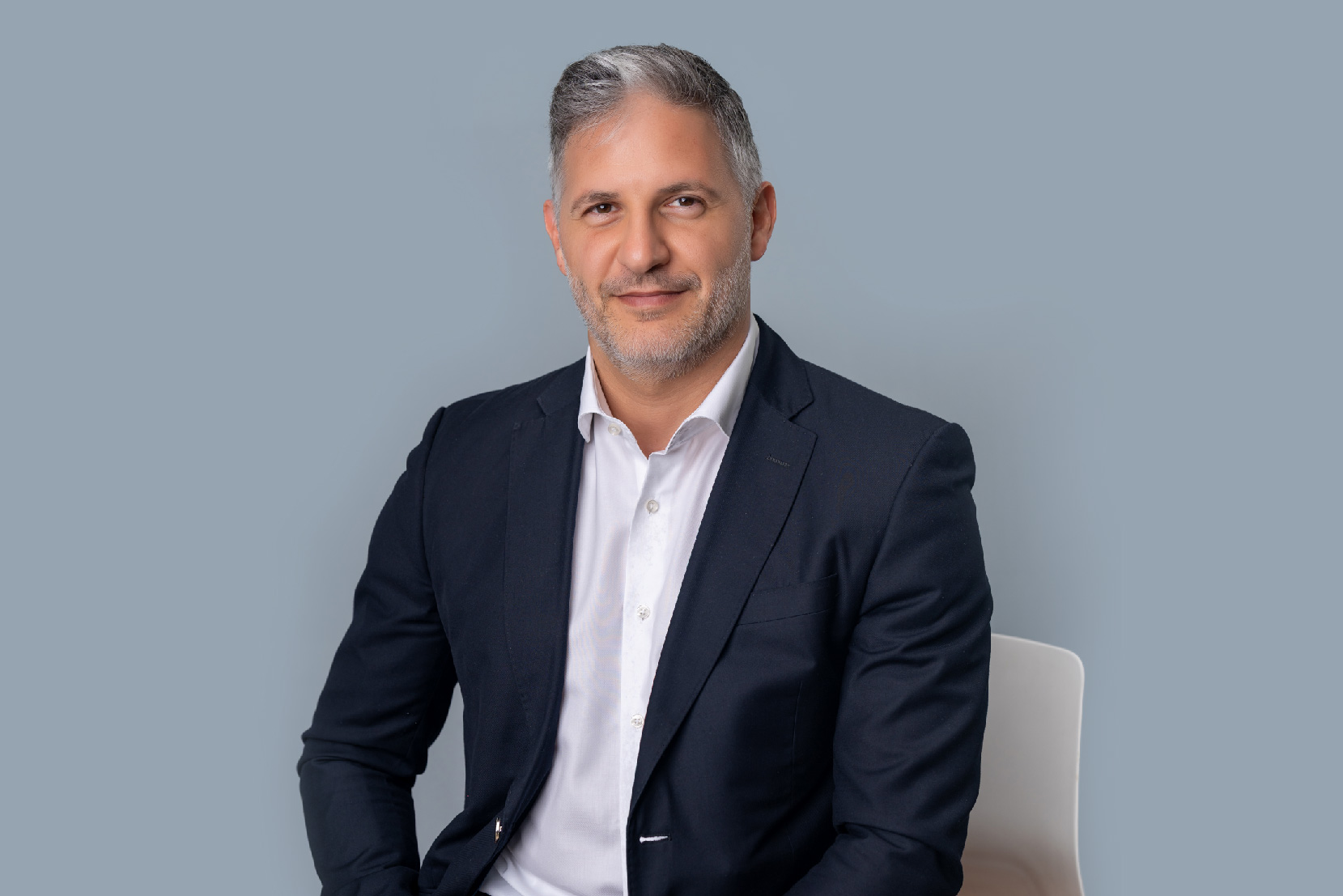
Bangladesh Brand Forum’s flagship held its 5th Leadership Summit. This year, the vision was to groom leaders for the next decade with the tagline “Bangladesh Dialogue for the Next 10 Years”. Powered by Beximco and AIUB, 5th Leadership Summit took place on 7 April, at Le Méridien Dhaka.
This summit included the presence of leaders of various industries who shared their idea in order to prepare the future leaders. Divided into four key segments: Economy, Planning & Strategy, Innovation, and Sustainability, the summit revolved around different leadership aspects from both national and global perspective, presented by the government, private sector and global experts. Anwar Group of Industries supported this momentous initiative as one of the event partners.

Principal
The Boston Consulting Group
Google Analytics has an algorithm that helps them recruit and retain talent. How can any other company apply this system?
There are two aspects to that; it is about talent recruitment and retention because they conduct this process very well. It is about understanding that recruitment and retention make sense for that company. For example, if you are Grameenphone, you need to understand what drives retention for that particular company. Applying the Google algorithm could help you bring talent to the table. But I think the idea that you really need to unlock is that we have all this data about how people are staying in the firm, moving in different directions, and leaving the firm. How can they harness that data to answer questions like when are predicting a burnout from one of our employees and they are at risk of leaving. It is about coming about the right algorithm for that company. But make it strategic to your company.
Billion dollar companies have moved to Asia such as China and India. What can Bangladesh learn from these nations?
I know the shift is definitely happening in these companies. It is not just about them coming here; many of these companies are homegrown. Many of them are exactly in Asia like India and China. It is just not about what makes a billion dollar company its net worth. It is understanding the journey that is needed when establishing such a company. When we spoke about the disruptions that are happening. There is an opportunity in all of those which can be combined with leadership, strategize and find out which expansions are out there, the right time to expand and all the enablers that are needed in order to tap into that market and win. What is special in these nations is that they have taken what has worked in the West but they have not been shy to introduce their own takes on these disruptions. I can give you one example from India. There is a famous software IT company, Infosys, that has a very small HR department. It is a 50,000 person company with only 100 people working in HR. It seems very small but they are able to empower people to do the right things and provide strategic elements to help guide them. This has not been emulated in the West. It allowed this company to build into what it is today. For Bangladesh, this means they have to capture some of the elements of shift which are needed, recognizing the strengths we already have and which are needed and which we can build. Finally building it to make it work.
Could you detail the shift in the business model, the economic model, and the political model?
On the economic shifts, the single notable change that is coming is the multiple pullers; what this means is that you do not have one superpower from a consumption or an export production standpoint to really dominate the rest of the globe. We have had that in China and the US but that dynamic is shifting now. You have a middle-class affluent population that is well dispersed and not sitting in specific pockets. It is about understanding where those opportunities are and then harnessing those opportunities to find a customized built-in way to incorporate those. The world is shifting away from what China and the US need to do and how it drives us. The business part has this element towards moving to services. It means making a lot of merchandise into trade products into service. When I moved to Malaysia, I tried to buy myself a car duster but I could not find a proper car duster because they have made it into a service. You do not dust your car, you go to a designated place and they do it for you. When you add service elements to products, they become more valuable. This dynamic is seen in aircraft engines. You no longer just purchase the engine. You need the guarantee, the maintenance and repair that comes with it and even the upgrade. There is a move towards what drives businesses. It is not necessarily a global value chain where you need a part of production in Bangladesh, India, and China or the Middle East. It is about understanding what aspect of the global market you need from there and supplementing that with centralization. Uber is a great example. You have a single model that centralizes everything but it is localized in its implementation. The drivers for Uber cars are local, the cars are local assets, and the way you get around is also local. Uber does this a national, geographic and city level. And it allows autonomy but it is still integrated at the end of the day and centralization. The third part is critical. We have always been about multilateralism when there has been a discussion of economic and politics winning and trade taking the front seat and politics taking the second; that hierarchy is now shifting. And what needs to happen in this situation as regular people functioning in the ambit of what is happening around us. We need to recognize this and pick up the right areas that we need to focus on. When I spoke about the multilateral financing of the organization, this is important because it is about the shifting of funding. When you are a company in Bangladesh and need the financing, where are you going to get this? Is it going to be western driven or are you going to get it from a financial entity? It has to do with geographic location and financial ability of these organization and their way to build a more active role is more limited.
What regulatory steps can the government take to foster a better business environment?
One of the examples of this is, I would say, Makerspace. The idea is that you have very small, arguably sub-scale companies that are trying to achieve similar things in individual pockets. There is a wealth of productivity that can happen through collaboration. In old class economics, we call it thick market externalities. There is value in Silicon Valley and it is having that space in which all these companies can collaborate with smaller companies to make a change. The licensing, sometimes this is too expensive for smaller companies to afford them. Once they have the scale they will be able to do that. We can have a method of communal license that can be tapped into that. The third example is best practice sharing. It is about bringing a forum that is more successful that can be learned from and emulated. Small companies to enable this at scale. Samsung can talk to them. It becomes difficult for the largest companies. But we want to inspire and provides knowledge and expertise.

Clinical Professor of Innovation & Entrepreneurship, Kellogg School of Management
Co-Founder & Executive Director, Kellogg Innovation Network
AI Robotics systems taking on jobs. How do you propose we prepare ourselves?
Regarding automation, part of the trick, the opportunity, and the threat is that honestly not much is going to change in the next couple of years. There are already lots of really extraordinary advancements going on but in terms of the overall picture and the economic dynamics in Bangladesh, in the next few years, the impact will be minimal. The good news is that it gives us time to think this through. The bad news is the impact of automation will not be present in acute enough fast enough for business and government to take the action now that they should be taking in order to adjust. In 10 years or 20 years, and this is the horizon that Bangladesh is looking at in order to become a fully developed country, the horizon of it the impact will be profound. To give an example, earlier today we heard the chief economist of Bangladesh Bank, Faisal Ahmed, as he was speaking about enhancing productivity, automation is a great way. In the context where you have 160 million people, a large chunk of whom need gainful employment, figuring out how to raise efficiency through the use of automation and also robotics and AI. How do we figure out how to bring these technologies now? Leapfrog is the keyword, where others are also using that to bolster and develop how much people in jobs can accomplish and what they have so that individuals have the capability to utilize that technology and find other roles for themselves to play. And this will be a moving target. The answer to this question in five years will be utterly different from what it will be in 20 years. This is the biggest challenge, it will happen very quickly when it starts to cascade through different industries at varying rates. Look at what digitalization has done to media and how it has ripped apart the models of newspapers, magazines, and television with online and social media. It will affect all industries from natural resources to factories in very different ways.
You have recently written about how Viva Activa is a model that explains the change in automation and robotics. Could you detail this theory?
One of the reasons I was struck by Hannah Arren’s work is that she wrote this in the 1950’s and automation was starting to become a factor. We were not talking about AI or the robotics that we think about today. Automation and machination were going on in the factory. She was thinking penetratingly about the long term. I found it exciting that she was thinking about the very long term and leveraging resources from thousands of years ago, the ancient Greeks. In the human condition, her work struck me as providing a map of where we are going in the next 20 to 50 years. Her pyramid has three hierarchical levels: labor, work, and activity.
– At the base of her pyramid, we have labor, which simply refers to any activity that results in the inputs to metabolism in other words such as food production, finding water, growing grain, raising animals to eat. Anything where we expend energy to create something that we consume and it goes away. Furthermore, we must continue to consume over and over again to support metabolism. It is mostly agriculture but it is bigger than that.
– A level above that is what she calls work. It refers to any activity humans do in order to create the artifacts of human life. In order to create things that hypothetically or notionally might last forever. We don’t necessarily mean forever but this table for instance or the mobile phone used to record this conversation would be the examples of outputs of work. Interestingly this also includes creative arts, physical creative arts like a painting. That in her framework is the output of work, human artifacts of our lives.
– At the top of her pyramid is action. By action she means specifically engagement between human beings; arguing points, building perspective, the political sphere. She does not limit it to politics as we think about it in government and governance. She means in terms of how we relate to each other and relate to the world, how we communicate and how we envision the future and promulgate the future and our beliefs and vision. The argument of what some might call engaging in the community. This is what she means by action. What struck as I was reading it was that she laid out a skeleton of how automation and technology have cascaded across all of the activities of humanity. For example, how long have we been using technology to improve the productivity of agriculture? 150 years ago most Americans were on the farm, today under 2% are of the US workforce is engaged yet agricultural productions are orders of magnitude greater than the previous times.
Therefore, we have already made this happen and those people have transitioned into what you may call activities of work and manufacturing artifacts. Some have transitioned into the sphere of argument, the sphere of argumentation and governance which she refers to as an action. So what we will see after 100 years is the intensification of the application of technologies will not only automate the provisions of the fruits of labor, which in her case means metabolism. Moreover, all of the factors of work will increase take human beings out of the process and put artificial intelligence into it. Eventually, we will be faced with a realm that only provides us with action. I want to add a qualification of hers that I agree with. At that point we will have the option to dig a ditch if we want to, We can make that table if we believe it will motivate us or make our lives better than we are welcome to do that but that is unlikely to be the dominant set of activities that we will do to build a living in societies. The dynamic process, the decisions you make create paths that take you in one direction more than the others.
You emphasize education in innovation and finding purpose. How do you help people find purpose?
I want to underscore that, people don’t have to find purpose or mission. Your life is far better when you do. Very few people ever feel like they find their singular purpose in the world. And it might not be that you have a singular purpose in the world. For each of us, it may be a moving target. There are people who spend their entire lives dedicated to curing cancer or that one pursuit. There are also those people who seek a variety of missions over time and find great comfort and motivation in doing so. The real point of the article is that as technology can increasingly do anything the question for each of us becomes what should we do. The skill is how do I envision and decide what almost none have been trained for. I know in the US and similar in Bangladesh we learn about subjects skills and capabilities. We learn about leadership. But do we learn how to go through a process or how to answer the question for ourselves? What is my purpose? What should I be doing and why? And by purpose, I do mean the long-term I really want to cure cancer and whatever it happens to be or build a great company. I also mean the nearer term questions like what should I do with my career. Very few of us have been given the tools to ask those questions and in the future where so many things we take for granted will be automated or automatable. We have a far greater need to address this question of purpose over and over in our lives. I say if we can help people answer that, we can help people live a more fulfilling life and society is going to be more prosperous.
Once you give people examples of other and their journeys either through stories and cases but also through direct cases and they get to hear each other’s stories. This inspires and helps people gain perspective. Secondly, you introduce them to people outside their current space; whether that is geography, industry, discipline or background. When we see different human being from different backgrounds tackling various challenges, it causes and sparks our micro-neurons to empathize with them and try to discover their mission. Bringing people together to network, see their relationships helps them through stories. Science is showing this more now that human beings are learning far better through stories than through frameworks or equations. There are some exceptions. People remember, they identify with and change mindsets and thinking through meaningful stories.