


Page 84 - IBT Sept 2021 (1)
P. 84
Transportation Industry
By Amarta Galib Chowdhury September 2021
metropolitan, and city governing bodies are operates almost five hundred stations across the country. with 80 percent of traffic, are mostly engaged
A Path development while government agencies roads have been the preferred sectors by successive attempts to connect with the
responsible for road and bridge sector
with India. Bangladesh has taken several
However, though costlier to build and maintain, highways and
Bangladesh-China-India-Myanmar corridor and
governments. Bangladesh has one of the densely built road
dominate rail and water sectors. The absence of
Belt and Road Initiative,
networks in the world. With its 21,302 kilometers long paved
central coordination has resulted in costly,
Bangladesh-Bhutan-India-Nepal (BBIN) motor
unnecessary reversal and delays.
and more unpaved network, roads have long replaced dying
vehicle agreement, and major projects
river networks as the most preferred connection mode. More
concerning these. The country is already
than 3.4 million vehicles plow these roads, along with
to Infrastructure development numerous three-wheelers and other locally built motor and facilitating India’s connection with her
Road, Rail and Water transport
paddle vehicles. The government has initiated major Projects
Northeast provinces, at the same time; transit
The British efforts to shape the historical
facilities are also helping Bangladeshi traders
under Bus Rapid Transit and Metro Rail projects. Four Lane
water-based transport practice in Bengal
Expressway connecting Dhaka and major industrial centers of
to reach the Indian market.
introduced some of the major rail projects in
Dhaka, Gazipur, Narayanganj, Manikganj; 1.7 billion
the Indian subcontinent. The 1971 war left
expressway in Sylhet-Dhaka region are some of the promising
Challenges
most of the country’s road and river transport
Progress systems in ruins. The government took major features. The brightest fit to step up Bangladesh’s road Though paved and unpaved roads are not a
transport is the building of Padma Bridge. These projects cost
dream anymore almost for most of the remote
steps in the 1980s by reshaping administrative
immensely, for example, the Dhaka-Gazipur connecting road
corners, what Bangladesh suffers from is a
divisions. The introduction of union and
costs more than 4,000 crores BDT and is already running
serious safety issue. Lack of training, proper
Upazilas meant major efforts were on the way
behind schedule. The Padma Bridge cost more than 28
guidelines, and monitoring authorities,
to penetrate rural areas. Upazila sadars were
thousand crores BDT. The utility of these new projects is
connected with major highways, leading to the
depends on the driver's skills. Institutional
economic centers of Dhaka, Chittagong, and
standards are not maintained. Outdated
Khulna. Port of Chittagong and Mongla were expected to be very high. corruption means the sole safety factor here
already major sectors in this regard. Domestic The economic impact of road and vehicles are a major concern too. Moreover,
political strife halted the efforts largely in the transport sectors most of the roads remain in poor conditions,
late eighties to early nineties. Many projects The penetration of roads and modern facilities across the lack significant or long-lasting repair work, or
were shelved, slowed down, or overran the cost country brought new economic opportunities to Bangladesh. It are just simply too narrow to support heavy
and provided little to no result. The country has facilitated the growth of small vendors, roadside traffic. Roads are an expensive business in rules are frequent. This has led to a profit-driven private sector
saw the second round of major infrastructure businesses, and new marketplaces. The backbone of Bangladesh. It’s arguably the most expensive too, disregarding public safety.
development since the 2010s. A major port and Bangladesh's economy is its garment sector and industrial country to build roads, along with maintenance Frequent collisions and accidents are common in the water
road facilities are being taken all around. Since satellite cities circling Dhaka. Since the 1980s, Dhaka, and poor planning means frequent disturbance sector too. Only in the last 11 years, 387 vehicles have sunk,
2006, ADB alone has loaned 6 billion USD for Narayangang, and Gazipur have become the main industrial for smooth operations. Bangladesh lacks any more than a hundred of them remain at the bottom of
the transport network. hub, drawing millions across the country. Availability of cheap specialized agency to overtake a coordinated channels. Government agencies are ill-equipped as their 4
The water flow of 24,000-kilometer-long river labor and an equal surge of entrepreneurs largely depends on approach in road infrastructure. Local rescue vehicles with a combined capacity of close to 700 tons
systems has been a problem since the road and transport network being built around Dhaka and government and city development agencies are merely enough. Many river routes demand constant
independence. Today 6,000 kilometers remain to some extent Chittagong and other cities. Around 8 million overview the projects while there are frequent dredging while in many cases collisions between ships and
navigational during monsoon; it reduces to MSME industries and large businesses are mostly dependent uncoordinated and ill-planned examples. bridges or accidents. Water flow remains a big problem and
3,900 kilometers by the dry season. The river on road networks. Roads have brought electricity and future Carelessness on the part of monitoring or demands constant dredging. Outdated vehicles are
transport system is cheap and preferred by chances for pipeline borne gas, water facilities. The building of planning authorities is abysmal. One example overwhelming in the 22,000 plus fleet using Bangladesh
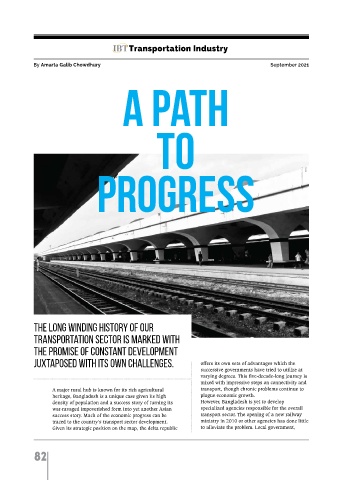
The long winding history of our many in the Southern regions. While many the highest road in Thanchi-Alikadam marked Bangladesh’s suffices: The flyover in Dhaka’s waterways. Many of its 22 major ports remain underdeveloped
and underutilized. For example, the station in Pangaon Inland
Moghbazar-Mouchak area had to go through
rivers lost their water level and ceased to be
transportation sector is marked with operational by large boats; major routes of significant attempt to connect backward hill regions and reap major delay and rebuilding as the previously Water Terminal, built with much hype and investment,
the benefits of tourism thanks to the scenic beauty of
remains mostly unused. River erosions and ill-planned river
approved design wasn’t suitable with the
Padma, Burigandha, or Meghna rivers are still
the promise of constant development used by vehicles more than a thousand tonnes. Chittagong Hill Tracts. Bangladesh road system. control projects also remain a problem. Another key issue is
In 2021, the land and water transport sector added more than
environmental damage. This is particularly in the case of
juxtaposed with its own challenges. offers its own sets of advantages which the The river transport also serves fuel to crucial 1.8 trillion BDT to Bangladesh's GDP. Almost 4 million people In 2019 alone, 8,543 people lost their lives on Sundarbans where oil, coal, and cement carrying ships have
roads, along with 14,000 plus injuries.
Rampal power plant and export-import through
are employed here. The dominating sector is road
successive governments have tried to utilize at Mongla and Payra port. Recently, the first-ever understandably, employing more than 80 percent of the Bangladesh roads remain one of the deadliest sunk frequently to make things worse. The government agency
varying degrees. This five-decade-long journey is transboundary river shipment of export has transport sector. to travel in the world. Student and public BIWTC is yet to achieve high standards suiting the river
mixed with impressive steps on connectivity and taken place through Khulna and Comilla to protests resulted in the 2018 Road Safety Acts transport system.
A major rural hub is known for its rich agricultural transport, though chronic problems continue to India. International commerce but the details are yet to be implemented. Transport service lags well over international standards.
heritage, Bangladesh is a unique case given its high plague economic growth. Railway also had a reputation as the safe, Railway also suffers the problem of Almost three-fourths of Bangladesh’s forty thousand plus
density of population and a success story of turning its However, Bangladesh is yet to develop cheap, and reliable transport sector. Three major international airports and several regional ones obsoleteness. 78 or more than one-third of busses operate in and around Dhaka. Syndicates and
war-ravaged impoverished form into yet another Asian specialized agencies responsible for the overall Bangladesh has a 2,900 route kilometer rail serve national-international passengers but the high ticket engines of its inventory are outdated or monopolistic behaviors from the transport owner’s part have
success story. Much of the economic progress can be transport sector. The opening of a new railway network. In recent times new tracks and price and short distance made airlines available to limited demand much costly, constant repair jobs. As often resulted in clashes and poor service too. Constant hassle
traced to the country’s transport sector development. ministry in 2010 or other agencies has done little engines have been introduced to make the users. The port of Chittagong serves 92% of Bangladesh’s rail and water transports are heavily dependent in the means of the ticket price, traffic congestion, and lack of
Given its strategic position on the map, the delta republic to alleviate the problem. Local government, railway profitable. Bangladesh Railway export trade, while four major land ports, including Benapole on the government, corruption and violation of monitoring bodies hamper public comfort and safety.
82

