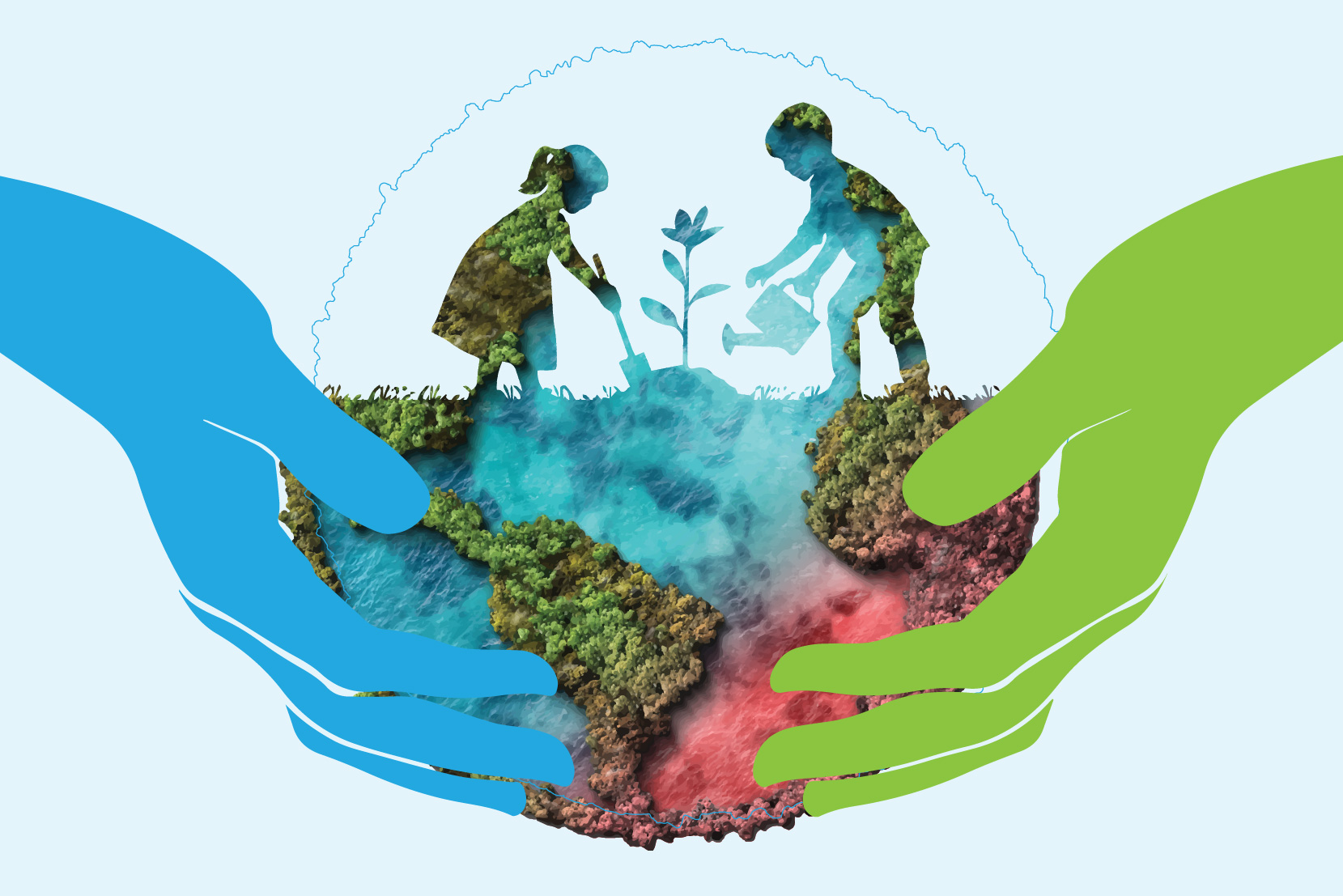
The impressive climate change mitigation and adaptation efforts undertaken by 4A Yarn Dyeing Ltd., a concern of the Bangladeshi conglomerate Team Group, and its mission of net-zero carbon emissions by 2050.
Climate change is not a new phenomenon — natural climate change happens over thousands to millions of years. However, when humans began burning fossil fuels at the beginning of the Industrial Revolution, we emitted greenhouse gases (GHGs), seven of which have specific global warming potentials (the Kyoto gases), at unprecedented levels.
In 1992, to address rapid global warming, the United Nations Framework Convention on Climate Change (UNFCCC) was established — a significant step towards international climate action. The treaty was signed by 154 states at the United Nations Conference on Environment and Development (UNCED). The objective: to stabilise GHG concentrations in the atmosphere to prevent dangerous anthropogenic interference with the climate system. The UNFCCC has been ratified by 197 states, and is the parent treaty of the 2015 Paris Agreement. Bangladesh is one of the signatory states of the Paris Agreement.
In December 2018, during COP24, the Conference of the Parties held in Katowice, Poland, the UNFCCC launched the Fashion Industry Charter for Climate Action (FICCA) to bring together various stakeholders from the fashion industry, including brands, manufacturers, and organisations to address the sector’s substantial impact on climate change.

4A Yarn Dyeing Ltd., a concern of Team Group, is a Bangladesh-based conglomerate specialising in apparel manufacturing and is the first outerwear manufacturing company in the world to join FICCA. By signing the FICCA, 4A Yarn Dyeing Ltd. has committed to reducing its aggregate GHG emissions by 30% by 2030 (baseline emission target – 2019) and achieving net zero emissions by 2050. To make concrete progress on these commitments, several technical working groups have been established in which signatories are defining steps for implementation. 4A Yarn Dyeing Ltd. became a member of Working Group-3 (Manufacturing/Energy) and Working Group-4 (Policy Engagement). As a signatory, it has also developed a decarbonisation pathway based on methodologies from the Science Based Targets initiative (SBTi), which helps companies set science-based emissions reduction targets.
“The commitments made by 4A Yarn Dyeing Ltd. have to be reported properly. We report to a platform endorsed by the UNFCCC called the Carbon Disclosure Project (CDP). The CDP is the world’s most comprehensive climate reporting platform. It is a huge endeavour where 4A Yarn Dyeing Ltd. has to answer a few thousand questions, all of which must be backed up by proper calculations — energy mix, per product energy consumption, carbon intensity of production, intensity against per dollar earned, to name a few,” said Mohammad Monower Hossain, Head of Sustainability at Team Group.
“We also report our sustainability process to the Global Reporting Initiative (GRI), to the Scandinavian Textile Initiative on Climate Action (STICA), and we are also committed to the United Nations Global Compact (UNGC),” he added.

The total load requirement for 4A Yarn Dyeing Ltd. is 1.5 megawatt-hour (MWh) or 1500 kilowatt-hours (kWh). Of this, the total capacity of its solar panels is 743 kilowatt-peak (kWp), more than double of its 300 kWp capacity back when it committed to the UNFCCC.
“The total capacity of solar can support up to 50% of the load requirement,” notes Monower Hossain, “but what we can generate, on average, is 20% to 25%.”
4A Yarn Dyeing Ltd. is also a LEED Platinum factory certified by the United States Green Building Council (USGBC). Furthermore, it has adopted a proactive sustainability approach, integrating energy-efficient and eco-friendly technologies across operations. Key initiatives include LED lighting, inverter-based machines, and power factor improvement (PFI) systems to cut energy use, and boiler economisers to reduce emissions and natural gas consumption.
The factory also leads in recycling initiatives, reusing steam, conserving water through rainwater harvesting and push-type taps, and using condensate recovery systems in dyeing.

4A Yarn Dyeing Ltd. also works on climate adaptation. The factory has signed a Memorandum of Understanding (MoU) with the International Organisation of Migration (IOM), giving climate vulnerable, climate displaced, and climate migrants the opportunity to be formally trained and be employed at the factory. To maintain indoor air quality, 4A Yarn Dyeing Ltd. follows American Society of Heating, Refrigerating and Air-Conditioning Engineers (ASHRAE) standards and guidelines, ensuring indoor air quality (IAQ) is at its best. Air circulation is maintained using exhaust fans and water towers, meaning indoor air is usually 2 to 3 degrees lower than the air outside. When the weather gets overbearingly hot, the factory provides saline water to workers to ensure good working conditions.
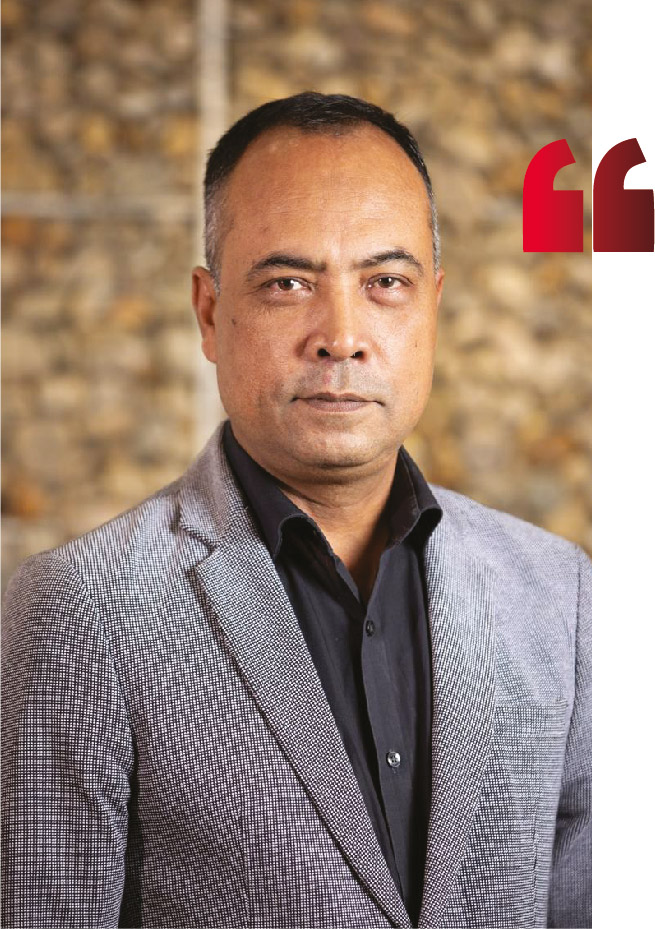
Deputy Managing Director, Team Group
Photographs: Courtesy of 4A Yarn Dyeing Ltd.
The motivation comes from within. Nobody is pressurising or forcing us to do this, and neither do we believe in that. What we do believe is that the moment we step outside our confined office spaces, we are breathing the same air as the working rickshaw puller, and that air can never be segregated. The Almighty has not given us the power to remove all hazardous materials from the air, but what we can do is take actions so that we can emit less and pollute less. And this is where our inspiration, our way of thinking, comes from.
I know fully well that if everyone — 100% of the people — is not aligned in this thing together, it may not work out. But, whatever is possible on our part, we will do it. As the first outerwear manufacturing company to sign the Charter, I believe we have a definite goal in achieving net-zero carbon emissions by 2050. I hope that by seeing us, others will follow, and we can live and lead a peaceful life in this world together.”